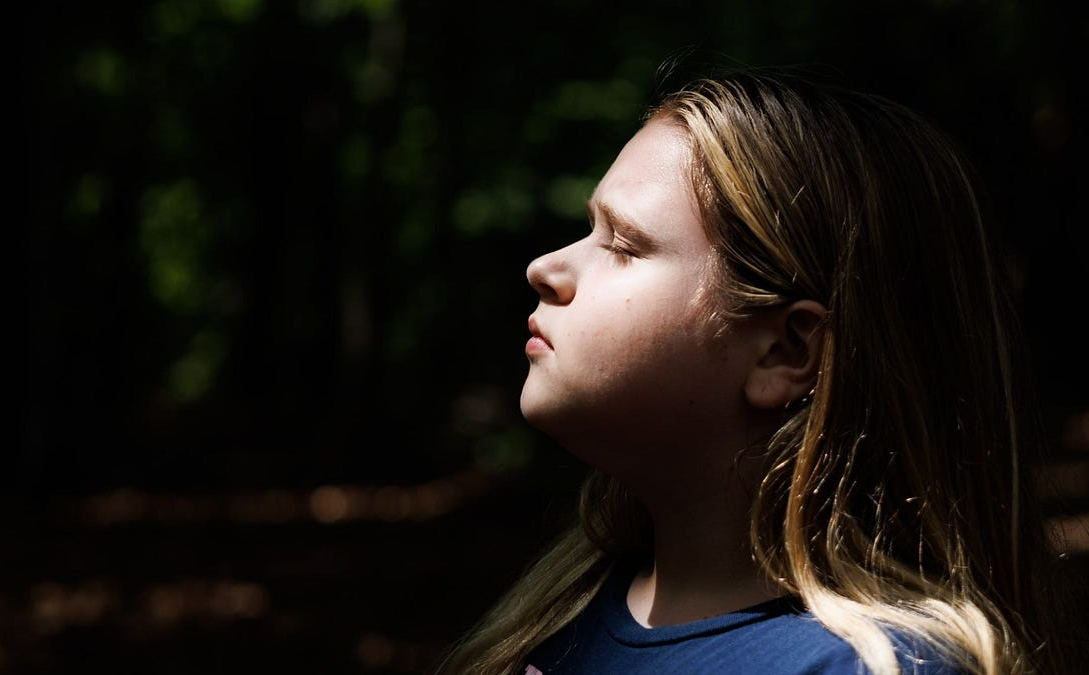
On a June night in rural North Carolina, dozens of campers sat around the fire as a counselor asked them to close their eyes.
“Picture a place where you feel completely safe,” they were told. “Think about what it looks like and how it feels, what you can hear, smell and taste.”
When they were invited to share what they had imagined, one camper described sitting in a circle with other trans people. It was dark. Trees surrounded them. Mosquitoes buzzed.
“‘That place is here, and this is the place where I feel safe,’” Jacob Hofheimer, one of the camp’s founders, recalled the camper saying. “It got all of us.”
For many of the 8- to 17-year-olds who attend Transcending Adolescence, the weeklong summer camp offers a reprieve from the calculations they have to make in their day-to-day lives: Who knows they are trans? Who can be trusted? Which bathroom can they legally use?
At a time when 40% of transgender and nonbinary youth seriously considered attempting suicide in the past year, and 90% of LGBTQ youth reported that recent anti-LGBTQ laws, policies and debates cause them stress or anxiety, those questions never disappear. But at this camp, young people are given space to ask them openly and to a community that understands why they need to.
Transcending Adolescence was founded in 2019 by Jacob and his wife Chrissy Hofheimer. The trans married couple wanted to create a camp for queer kids in America’s South, where affirming resources can be difficult to find.
“A huge part of it is that every single person there is trans or gender diverse, including the staff,” says Rory Sowers, a 19-year-old junior counselor from Florida. “That’s just something that you don’t get to experience a lot, especially as a young trans person.”
Sowers first attended Transcending Adolescence as a camper during its inaugural year in 2021. He returned three times before becoming a junior counselor.
“There’s so much that trans folks have to worry about just going about their day-to-day lives, especially living in the South,” Sowers says. “I was able to come into myself a lot more when I didn’t have all of those anxieties on my back.”
For 12-year-old Ruby, pre-camp anxiety was intense.
When she attended camp in June of last year, it was the first time traveling to another state without her parents.
“I was nervous about having someone there not really understanding me … and not really accepting me,” says Ruby, whose name has been changed to protect her privacy.
Outside camp, Ruby worries about how other people perceive her, according to her mom, Kate, whose name has also been changed. She says her daughter has to consider a litany of questions cis kids don’t have to worry about: “‘What if someone finds out? Are they looking at me? Do I look the part?’ … All these thoughts go through her head every single day.”
Before camp, Ruby had been struggling so intensely that her family had questioned whether it might feel easier for her “not to be who she was,” Kate says. Ruby had faced bullying in school, prompting her family to withdraw her and homeschool her for the remainder of fifth grade.
For two LGBTQ-focused stories a week in your inbox, subscribe to Uncloseted Media.
But when she arrived at camp, a lot of Ruby’s anxiety subsided. She didn’t have to introduce herself through the lens of being trans. She could just be herself: a funny, theatrical, outgoing 12-year-old who likes Beyoncé, improvises rap battles and wants to be in the center of dance shows.
“She can just go there and just be [Ruby],” Kate says. “[Being trans] is only a little piece of her. There’s so much more to her, and she’s able to do that for the whole week. … It was completely life-changing for her.”
Research suggests that spaces like Transcending Adolescence can have powerful mental health effects.
Young people tend to fare better when they feel they belong and have access to peers and adults who understand them. In one small study from 2021, participants of a six-day LGBTQ summer camp reported increased resilience, self-esteem and quality of life. Focus groups indicated that transgender and nonbinary campers found an affirming environment that offered social opportunities they had been unable to find elsewhere.
Though this environment can be transformative, it’s intimidating at first for some. Jacob remembers asking one camper from Texas his pronouns during medical check-in, and the boy responding that he used “guy pronouns” because he “was a guy.”
Jacob recalled him being closed off and leery of the “hippie-dippy nonsense.”
But on the second-to-last night, Jacob overheard him speaking with a fellow camper.
He later texted Jacob to say the camp had given him confidence during the school year.
“‘Half the time, I forget that I’m trans,’” Jacob remembers him writing. “‘I’m just a guy. I’m just me.’”
The Hofheimer’s know that these spaces can transform the mental health of trans youth because they experienced it firsthand when they met while working as lifeguards at a summer camp for young queer people in New Hampshire.
The camp was doing important work, Jacob says, but many of its attendees came from privileged families in New England and other parts of the country where affirming programs were more accessible. Far fewer came from places such as Florida, Georgia and Texas.
That’s why, for the location of the camp, they intentionally chose North Carolina, a state that has laws on the books that exclude trans girls from participating in sports, restrict the instruction of LGBTQ topics in schools and ban gender-affirming care for trans youth.
At the camp, the staff educates campers about anti-trans laws, coming out and how to have conversations with their doctors about gender-affirming care.
“The kids want to talk about this stuff,” Jacob says. “That was the gap that we identified.”
For Chrissy, baking education into the camp’s programming is personal: When she was transitioning as a young adult, accessing informed medical care was difficult. During consultations, doctors either quoted prices she could not afford or refused to treat her. One told her that they did not “put boobs on men.”
Desperate to change her chest, Chrissy turned to a friend who had undergone illegal silicone injections without an apparent complication. She received what she believed were similar injections in Florida.
But the substance wasn’t silicone, she says, and it hardened and became intertwined with her breast tissue. Seventeen years later, Chrissy underwent a double mastectomy to fix the damage.
This experience became one of the driving forces behind the camp’s educational work.
To provide information that breaks out of the TikTok and Reddit misinformation bubble many campers exist in at home, Chrissy and Jacob bring in experts and host nightly fireside chats.
Each night, campers gather around for structured conversations about the nuances of being trans. They talk about coping with misgendering, managing bathroom anxiety, identifying red and green flags in relationships, asking for help and caring for their mental health.
Jacob, who is a certified nurse practitioner, helps answer questions about gender-affirming care. A trans attorney explains policies affecting campers in different states and separates the practical effects of those laws from incomplete information and political fearmongering.
“It made me think about the people who I tell I am trans to and what I have to do to make sure I feel comfortable telling them,” Ruby says. “It let me think about all these questions I had but didn’t really know how to ask.”
Chrissy hopes the results from the camp’s program will eventually be replicated across the country.
For now, roughly 30 campers come together for one week each summer. Some arrive unhappy about being sent to camp. But by the final day, Sowers says, those same campers are often crying because they do not want to leave.
They return home to the same schools, states and political climates where they have to decide when it is safe to disclose their identities and how to respond when someone does not understand them.
But at camp, Ruby, among the other campers, found a weeklong respite and saw trans adults who were not merely surviving but building careers, relationships and communities.
If objective, nonpartisan, rigorous, LGBTQ-focused journalism is important to you, please consider making a tax-deductible donation in the U.S. through our 501(c)(3) fiscal sponsor, Resource Impact, by clicking this button:
Donate to Uncloseted Media
What a wonderful story! It makes me hopeful that kids in the south get to have that experience.
No posts
Last modified: July 18, 2026